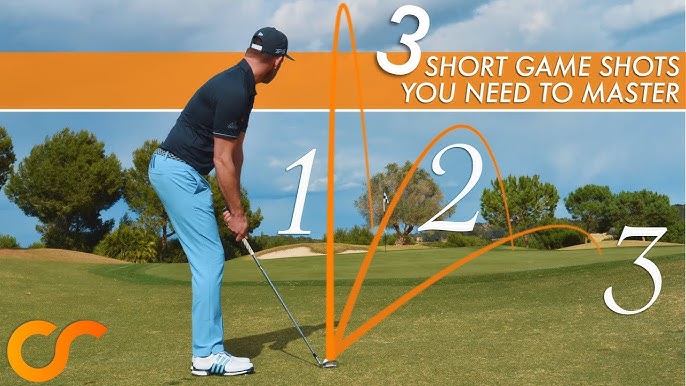
Master Your Short Game: A Golfer’s Guide
Drive for show, putt for dough. It’s a classic saying in golf for a reason. While a booming drive off the tee is impressive, the strokes that truly carve down your handicap happen within 100 yards of the pin. This is the realm of the short game—the delicate art of chipping, pitching, and escaping from bunkers.
The Art of the Chip Shot
A chip shot is a low-trajectory shot from just off the green that is designed to get the ball rolling on the putting surface as quickly as possible. The goal is to land the ball on a specific spot and let it release toward the hole like a putt. Mastering this shot eliminates the dreaded “stubbed chip” or “bladed shot” that can add unnecessary strokes to your score.
Chipping Technique
The key to a consistent chip is a simple, repeatable motion. Think of it as an extension of your putting stroke.
- Stance and Ball Position: Stand with your feet close together, about the width of a clubhead apart. Position the ball back in your stance, just inside your rear foot. This encourages a downward strike, ensuring you hit the ball before the turf.
- Grip and Weight Distribution: Grip down on the club for better control. Lean your weight forward, with about 60-70% on your lead foot. Your hands should be slightly ahead of the ball, creating a forward shaft lean. This setup promotes a crisp, clean contact.
- The Stroke: Use your shoulders and chest to rock back and forth, keeping your wrists firm and quiet. Avoid any flicking or scooping motion with your hands. The clubhead should stay low to the ground through impact. The length of your backswing will control the distance of the shot. For a short chip, a small rock of the shoulders is all you need.
Club Selection for Chipping
Choosing the right club is crucial for distance control. Different clubs produce different amounts of roll. A good rule of thumb is to select the club that allows you to land the ball just a few feet onto the green and let it roll the rest of the way.
- Pitching Wedge or 9-Iron: Use this for chips where you have more green to work with. It will produce a lower flight and more roll.
- Sand Wedge or Lob Wedge: These clubs are better for chips where you need to carry a hazard (like a bunker or rough) or stop the ball quickly. They produce a higher flight with less rollout.
Experiment with different clubs during practice to see how much they roll out. This will help you make better decisions on the course.
Perfecting Your Pitch Shots
A pitch shot is needed when you’re too far for a chip but too close for a full swing—typically from 30 to 100 yards out. Unlike a chip, a pitch shot flies higher and spends more time in the air, landing softly on the green with minimal roll.
Understanding Trajectory and Distance Control
Controlling your pitch shots comes down to managing the length and speed of your swing. A “clock system” is an effective way to dial in your distances.
- The Clock System: Imagine your body is the center of a clock. Your backswing and follow-through can correspond to different hours on the clock face. For example:
- A swing from 7 o’clock to 5 o’clock might produce a 30-yard shot.
- A swing from 9 o’clock to 3 o’clock might result in a 60-yard shot.
- A swing from 10 o’clock to 2 o’clock could be for an 80-yard shot.
Practice with your wedges to determine your personal distances for each “time” on the clock. This creates a reliable system for distance control under pressure.
Different Pitching Methods
The standard pitch shot is a great all-around option, but you can adjust your setup to change the trajectory.
- Low Pitch (Punch Shot): Play the ball slightly back in your stance and keep your hands ahead of the clubhead. This de-lofts the club, producing a lower, more controlled flight that is useful in windy conditions.
- High Pitch (Flop Shot): This is a high-risk, high-reward shot. Open your stance and the clubface at address. Play the ball forward in your stance and swing with speed. The ball will pop up high and land softly with very little roll. Use this only when you have no other choice, like when you’re short-sided with a bunker between you and the pin.
Conquering Bunker Shots
For many amateur golfers, the bunker is the most intimidating place on the course. However, with the right technique, escaping from the sand can become one of the most reliable shots in your bag.
Technique for Greenside Bunkers
The secret to a greenside bunker shot is to hit the sand, not the ball. You want the club to splash the sand out from under the ball, carrying it onto the green.
- Stance and Setup: Open your stance by aiming your feet and body left of the target (for a right-handed golfer). Open the clubface so it points at the pin. Wiggle your feet into the sand to create a stable base.
- Ball Position: Position the ball forward in your stance, in line with your lead heel.
- The Swing: Hinge your wrists early in the backswing to create a steep angle of attack. Swing down and aim to strike the sand about two inches behind the ball. The key is to accelerate through the sand and follow through completely. The loft of the open clubface will lift the sand and the ball out together.
Fairway Bunker Shots
Getting out of a fairway bunker requires a different approach. Here, you need to make clean contact with the ball first.
- Club Selection: Choose a club with enough loft to clear the lip of the bunker. It’s better to take one extra club and be safe than to hit the lip and remain in the sand.
- Setup: Grip down slightly on the club for better control. Don’t dig your feet in as much as you would in a greenside bunker.
- The Swing: Focus on making a normal golf swing, but stay stable and avoid swaying. The goal is a ball-first strike. Think of it as “picking” the ball cleanly off the sand.
Drills to Improve Your Short Game
Consistent practice is the only way to build confidence and touch around the greens. Here are a few drills you can do at the practice facility or even at home.
- The Ladder Drill (Chipping/Pitching): Place towels or headcovers at 5-yard increments from your position. Start by trying to land the ball on the first target. Once you succeed, move to the next. This drill is excellent for developing feel and distance control.
- One-Foot-Back Drill (Chipping): While practicing your chipping, pull your trail foot back so you are balancing almost entirely on your lead foot. This forces you to keep your weight forward and promotes a clean, downward strike.
- Line Drill (Bunker): Draw a line in the sand perpendicular to your target line. Without a ball, practice swinging and hitting the line every time. This trains you to consistently enter the sand at the correct spot. Once you’re consistent, place a ball on the line and repeat.
For those days when you can’t get to the course, using an e6 golf simulator can be a fantastic way to work on your short game. Many simulators have practice modes that allow you to hit chips, pitches, and bunker shots from various lies and distances.
Conclusion
A strong short game is the great equalizer in golf. It doesn’t require immense power or a perfect swing—just technique, practice, and a little creativity. By dedicating time to improving your chipping, pitching, and bunker play, you will build the confidence needed to handle any situation around the green.